Women in Tech London: Careers, AI and the UK's Changing Technology Market
London's technology workforce sits inside banks, retailers, consultancies and media groups as much as inside technology companies. That breadth is a career advantage.

London's technology industry is difficult to define because it does not exist inside one industry. Technology workers sit inside software companies, fintechs, banks, consultancies, retailers, cybersecurity firms, media organisations and multinational technology companies.
That breadth is one of London's greatest career advantages. It also means the next generation of technology jobs may look very different from the last.
London's technology workforce extends far beyond technology companies
British Business Review's research into the biggest technology employers in the UK makes an important distinction between technology companies and technology workforces. Banks, telecommunications groups, consultancies and engineering businesses can employ thousands of software, data and security professionals despite belonging to other industries, a pattern that is especially visible among the largest technology employers in London.
AI is changing junior and professional work
Britain is particularly exposed to generative AI because so much of its economy is concentrated in information-intensive services. Finance, law, consulting, software, marketing and media all contain tasks that advanced AI systems can increasingly assist.
British Business Review's analysis of which British professions are most exposed to AI makes a useful distinction: exposure to AI does not automatically imply that an occupation disappears. Jobs contain many tasks, and some are easier to automate than others. Women also remain a minority of the UK's artificial-intelligence workforce, and the structural risk is covered in our piece on the European tech gender gap and AI.
AI skills are becoming a national workforce priority
The UK government has begun formalising what basic workplace AI competence means. Skills England's 2026 framework groups AI foundation skills into technical, non-technical and responsible or ethical areas.
Separately, the Department for Science, Innovation and Technology's AI Labour Market Survey is tracking skills shortages and evolving requirements across the sector. The direction is clear. AI is moving from a specialist field toward a horizontal workplace capability - our practical guide to AI skills for women in tech covers what to build first.
Cybersecurity remains another important market
The UK's cybersecurity sector employed approximately 69,600 full-time-equivalent workers according to government-backed research, examined in more detail in reporting on the UK cybersecurity jobs and skills market. Employment growth has slowed, but revenue and economic output have continued to expand more quickly, suggesting an industry increasingly focused on productivity and specialised skills.
Building a stronger London network
London's size creates both opportunity and friction. There may be thousands of people relevant to your career within a few kilometres of you, but meeting them is another question. Professional communities create structure around that problem.
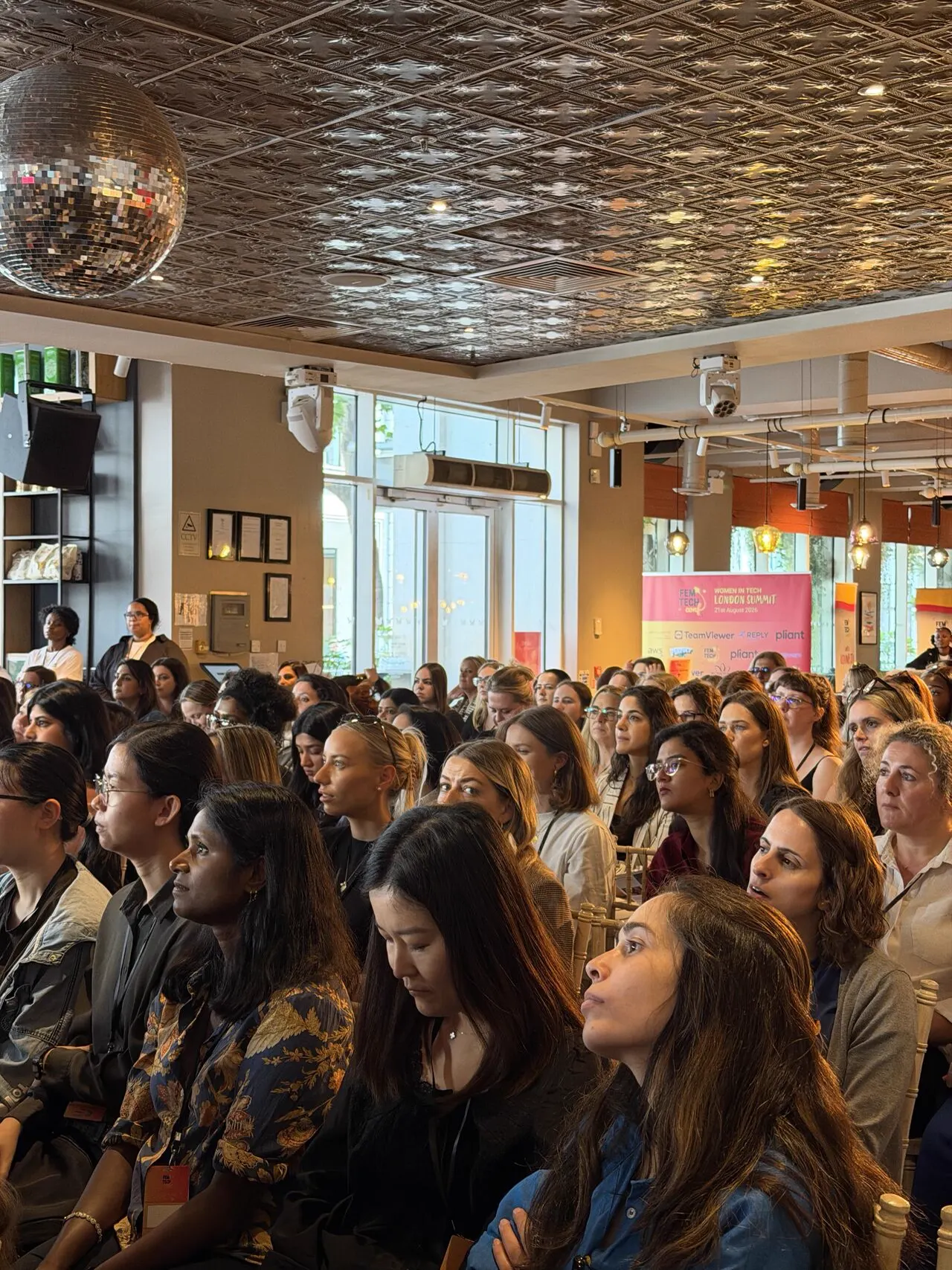
FemTechConf®'s Women in Tech London community brings together women and allies across engineering, AI, product, leadership and the wider UK technology ecosystem. For attendees, the value should be judged on more than the stage. Who will you meet? Which companies will be represented? Which conversations can you have there that are difficult to create elsewhere? Employers hiring in the UK are also present through the Expo and job board.
In a labour market being reshaped by AI, the strongest professional strategy combines skills with relationships. London provides an unusually deep pool of both.
Sources
- British Business Review, Biggest UK Tech Employers: 2026 Guide
- British Business Review, 20 Biggest Technology Employers in London
- British Business Review, UK Jobs Most Exposed to AI in 2026: Finance, Law, Tech and More
- Skills England, AI foundation skills for work
- UK AI Labour Market Survey 2025
- British Business Review, UK Cybersecurity Jobs and Skills 2026
- British Business Review, UK AI Gender Gap: Women Are Just 20% of AI Roles in 2025
- FemTechConf® London
About the author
Tereza Janackova
Program Manager, FemTechConf® and Women in AI, FemTechConf®
Tereza Janackova is a Program Manager at FemTechConf® and Women in AI, with a focus on programmes connecting technology professionals with employers, career opportunities and industry communities. Her editorial focus includes technology labour markets, AI careers, talent networks, hiring trends and access to professional opportunities.